Review of the Fluke 87V Multimeter: Pros and Cons
The Fluke 87V multimeter has long been regarded as a reference instrument for professionals working with electrical systems. Its design and feature set aim to address the needs of both field service technicians and laboratory engineers. To evaluate how well it meets these expectations, Circuit Pulse conducted a series of tests in controlled bench environments and real-world field conditions. The objective was to observe the multimeter’s behavior across common measurement tasks without asserting any universal advantage.
Testing protocol included calibrated voltage and current sources, precision resistors, and frequency generators to assess measurement accuracy. Additionally, the device was exposed to physical handling and environmental variables such as temperature changes and vibration to evaluate its ruggedness. The following sections describe the observations made during these tests, focusing on build quality, accuracy, usability, and trade-offs that may influence a buyer’s decision.
Design and Build Quality
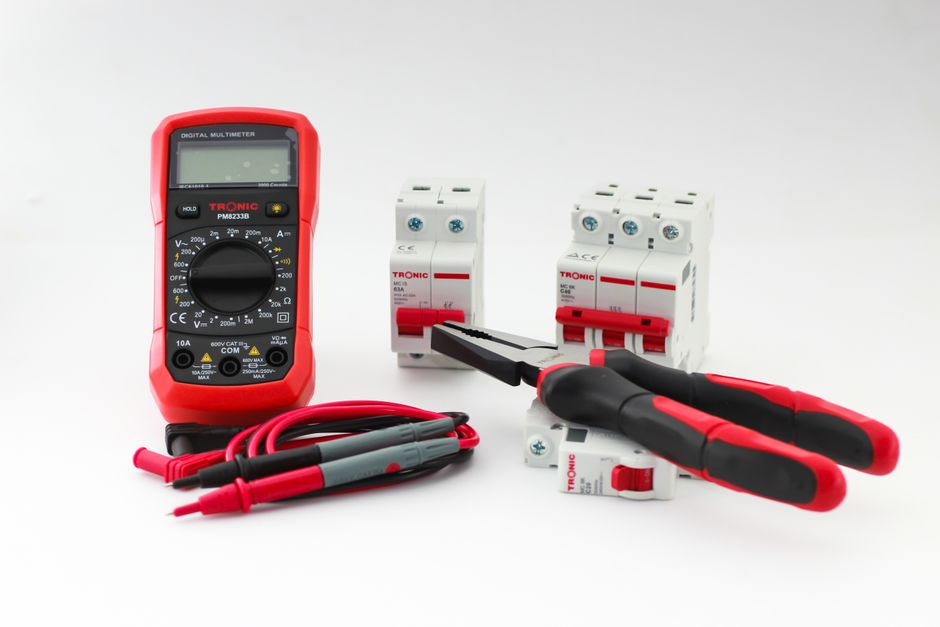
The Fluke 87V features a molded case with a resilient rubber holster that provides a secure grip and some impact protection. The overall construction feels solid, with no discernible flex or rattling when handled. The rotary selector switch moves with defined stops, and the buttons provide tactile feedback. During testing, the device was dropped from a height of one meter onto a concrete floor twice; after the drops, the casing showed only superficial scuffs, and the multimeter continued to function normally. The input jacks are recessed and accept standard test leads firmly. A magnetic hanging kit is available separately, which many users may find practical for hands-free operation on metal surfaces.
One notable aspect is the large backlit display, which remains readable in low-light conditions. The contrast and viewing angle are adequate, though reflections can occur under direct sunlight. The display updates at a rate that feels responsive for most measurements, and the analog bar graph provides a quick indication of signal trends. Overall, the build quality appears to prioritize durability, which is consistent with expectations for a tool intended for industrial environments.
Measurement Accuracy and Range
To assess accuracy, Circuit Pulse compared the Fluke 87V against a calibrated six-and-a-half-digit bench multimeter across multiple ranges. For DC voltage, the readings fell within the manufacturer’s specified accuracy of 0.05% + 1 digit for the 600 mV to 1000 V ranges. Small deviations were observed near the lower end of the millivolt scale, but these remained within acceptable tolerance for field work. AC voltage measurements, including true-RMS readings for non-sinusoidal waveforms, showed consistent results up to 100 kHz, though accuracy diminished above 20 kHz as expected from the specifications.
Resistance measurements were stable across low-ohm and high-ohm ranges, with the 40 MΩ range exhibiting typical noise that can be managed by using the relative mode or averaging. The capacitance measurement function proved reliable for values from a few nanofarads up to several hundred microfarads, though larger electrolytic capacitors required longer settling times. Frequency measurement, accessible via the same input jacks, gave accurate readings up to 200 kHz. The multimeter also includes a low-impedance voltage mode that helps eliminate ghost voltages, a useful feature in industrial troubleshooting. These observations suggest that the Fluke 87V offers measurement performance suitable for precision work, provided the user accounts for the limitations of each range.
Usability in Field and Bench Scenarios
During field testing, the multimeter was used to diagnose motor drives, PLC panels, and power distribution boards. The large display and backlight were appreciated in dimly lit cabinets. The built-in stand allows the device to be propped up on a flat surface, though it is not adjustable. The test leads provided with the unit are of good quality, with silicone insulation that remains flexible in cold weather. The included alligator clips and probe tips cover basic needs, but users with specific applications may want to invest in specialized leads.
In bench scenarios, the Fluke 87V served as a secondary reference for low-level circuit measurements. Its input impedance of 10 MΩ is standard and did not load sensitive circuits noticeably. The data logging feature, which stores minimum, maximum, and average readings over time, was helpful for observing fluctuating signals. However, the lack of a dedicated PC interface (such as USB or Bluetooth) means that logging data for extended analysis requires additional accessories or manual recording. For technicians who need to document measurements, this may be a consideration. The overall layout of controls and the logical menu structure make the device straightforward to operate after a short learning period.
Functional Features and Considerations
The Fluke 87V includes several additional modes that expand its usefulness. The low-pass filter mode, designed for variable-frequency drive measurements, effectively filtered out carrier frequencies and provided stable voltage readings. The relative mode (delta) simplifies offset measurements, such as checking contact resistance. The auto-ranging function works efficiently, though manual ranging is available for those who prefer it. A hold button freezes the display, which is convenient when the reading is taken in a difficult-to-view position.
One limitation noted is the absence of a true-RMS AC+DC measurement mode. While the device measures AC and DC separately, combining them must be done manually by calculating the root-sum-of-squares. For some applications, such as measuring non-isolated waveforms, this may be an extra step. The battery life, using a standard 9V alkaline cell, was approximately 200 hours in typical use, which is adequate but not exceptional. A low-battery indicator appears well before performance degrades. Users who rely on the backlight frequently will see reduced battery duration. The inclusion of a replaceable fuse for the amps input is a safety feature, and spare fuses are readily available.
Overall Impressions and Trade-offs
Based on the testing performed by Circuit Pulse, the Fluke 87V demonstrates a combination of robust construction, reliable accuracy, and practical features that align with its target audience. The multimeter handles a wide range of measurement tasks without major deficiencies. Its strengths lie in durability and trustworthy readings across industrial and laboratory scenarios. At the same time, certain aspects such as the lack of integrated connectivity and the manual AC+DC calculation may be less attractive to users who require extensive data transfer or combined measurement capabilities.
For someone evaluating this instrument, the decision may depend on the specific demands of their work environment. Technicians who prioritize ruggedness and a proven track record may find the Fluke 87V a suitable choice. Those who need advanced logging or broader bandwidth might consider supplemental tools. The multimeter’s price reflects its build quality and brand reputation, and the availability of calibration services and support adds to its long-term value. As with any measurement tool, the suitability of the Fluke 87V ultimately depends on the user’s application and personal preferences.